You probably think of your dry cleaner as the place that presses shirts and steams suits before a big meeting. That's not wrong, it's just incomplete. Dry cleaning is one process among several offered at what's really a garment care business, and the name on the storefront has quietly misled you for years.
Behind the counter, that same shop can reweave your hole, restore your leather, preserve your gown, alter your fit, and lift a smell that outlasted three washes. Here are seven capabilities you probably never thought to ask about.
A moth hole in a wool coat or a snag in a cashmere sweater doesn't have to mean the end of the garment. A skilled cleaner can reweave the damaged spot, pulling matching yarn from a hidden seam or hem and rebuilding the fabric until the hole disappears. It's handwork, so expect a longer turnaround and pricing based on labor rather than fabric.
Reweaving works best on tightly woven natural fibers such as wool, tweed, and some cottons, where threads can be pulled without unraveling the weave. Loose knits, synthetic blends, and printed fabric are harder to match invisibly. Most cleaners will want to see the garment in person before quoting, since hole size and placement both affect the result.
Leather and suede don't respond to cleaning the same as cotton or polyester. A specialist can recondition the material to replace lost oils, and in some cases recolor or refinish a faded section. That jacket you assumed was just old might actually be restorable.
If you see any of these, ask specifically about restoration rather than a general clean.
Garments aren't the only items that could use professional attention. Curtains, comforters, area rugs, and other large textiles get cleaned at the same shops that handle your shirts; most people just never think to bring them in. Capability varies more here than with clothing: some shops handle rugs and drapery in-house, others send bulkier items out, so it's worth asking before you commit.
Curtains and comforters rarely get washed. They're bulky, hard to fit into a home machine, and not worn daily, so they're easy to forget. Years of dust, pet dander, and smoke residue can build up in technically washable fabric but never make it into a laundry basket. Taking in these items alongside a seasonal wardrobe swap is an easy way to remember they exist.
Cleaning and preservation aren't the same service. Preservation involves archival-grade materials, a documented condition assessment, and storage built to keep a garment stable for decades, not just fresh for next season. Most people know wedding dresses get preserved. Fewer realize other heirlooms, such as a christening gown or military uniform, qualify for the same treatment.
Before preservation starts, a specialist documents existing stains, fabric weakness, and prior repairs, since sealing in hidden issues can lock in problems for good. The assessment also determines the proper method, since beading, sequins, or antique lace need different handling than plain silk.
This one hides in plain sight. Many dry cleaners offer tailoring on site, yet customers who've dropped off shirts for years often have no idea. That pair of pants sitting in the closet over a bad hem, or the blazer that never fit through the shoulders, has probably been passed through a shop that could have fixed it months ago.
Asking if the shop does alterations at drop-off, even for an unrelated item, is often the fastest way to find out what's available.
Smoke, mildew, and stubborn odor that won't quit isn't usually a washing problem, it's a location problem. In structured garments such as coats, blazers, and puffer jackets, odor gets trapped in the interlining or padding, layers a home wash never reaches. Professional processes target that inner layer directly, which is why one visit can succeed where three home washes couldn't.
A structured garment is built in layers on purpose, for warmth and shape, and that same construction traps odor-causing residue away from water and detergent. Spraying fabric freshener on the outside only masks the smell, since it never touches the source. Our post on stains that resist home washing covers this same layering issue in more depth.
A raincoat or ski jacket that used to bead water and now soaks through hasn't necessarily failed. The durable water repellent, or DWR, coating applied at the factory wears down with washing and time, but a professional cleaner can reapply it rather than needing a whole new jacket. It's a separate service from standard cleaning, treating the fabric's outer finish rather than just removing dirt.
If rain soaks into the fabric instead of forming beads that roll off, or if the jacket feels noticeably heavier after light rain than it used to, the DWR finish has likely broken down. This tends to happen faster around high-friction areas such as the shoulders, where a backpack strap sits, and the cuffs, from repeated contact and washing.
Now that you know what's possible behind the counter, the next question is who you trust for your dry cleaning. Not every cleaning process treats your garments the same way, and the wrong process can undo years of wear in a single visit.
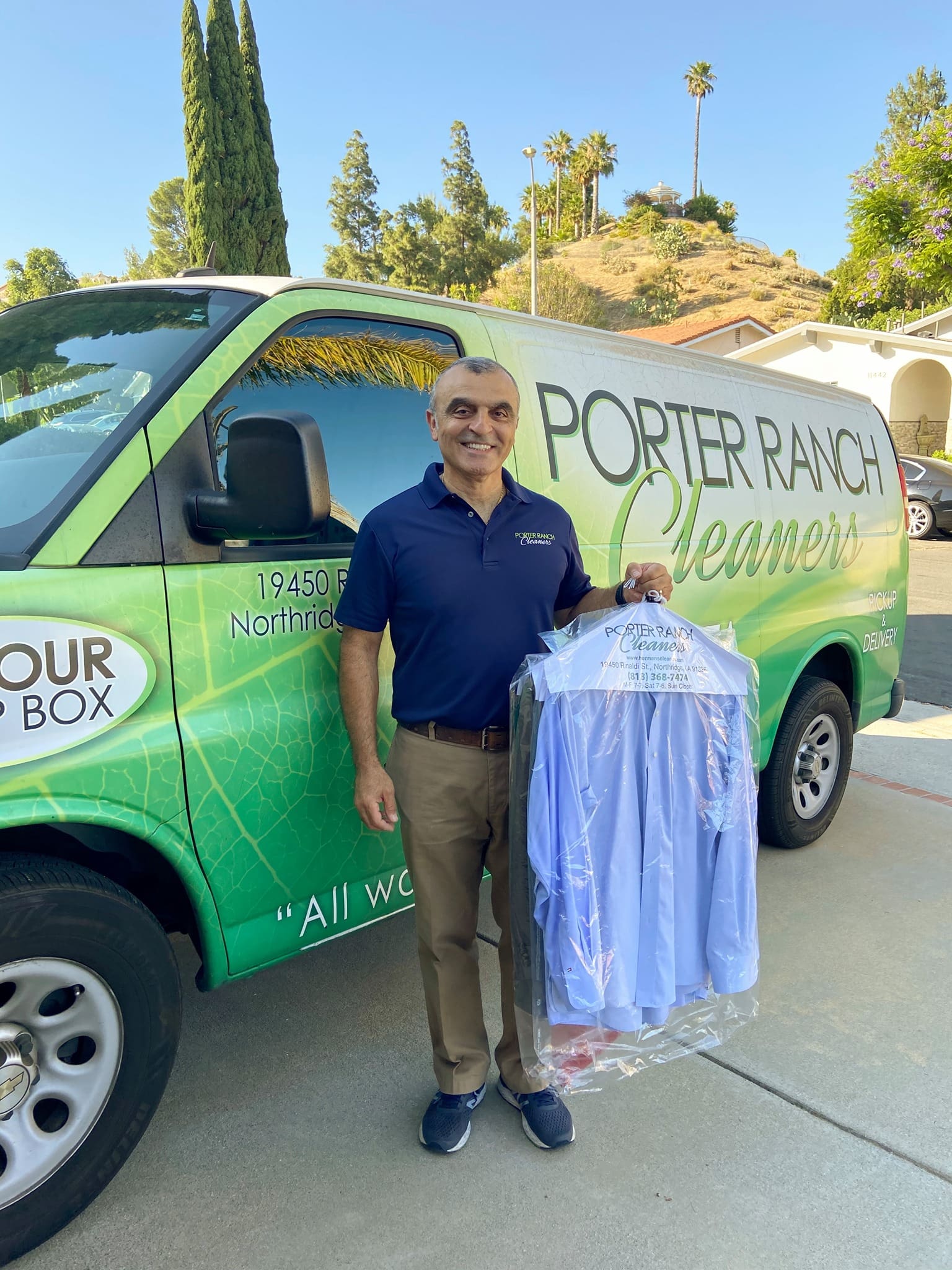
At Porter Ranch Cleaners, we've always been a 100% PERC-free cleaner, using environmentally responsible solvents that clean thoroughly without exposing your clothes, or your household, to harsh chemicals. Our process keeps your garments protected from shrinkage, fiber damage, and unnecessary friction while still delivering a deep, effective clean.
Book your dry cleaning service with us today! When you need a dry cleaner in Porter Ranch, California, we're ready when you are.
Address: 19450 Rinaldi St., Porter Ranch, CA, 91326
Phone: +1 (818) 452-4894
Hours: Monday to Friday, 7:00 AM to 7:00 PM. Saturday, 8:00 AM to 6:00 PM. Sunday, closed.