Finding the right outfit for a big event is only part of getting ready. If the hem is too long, the waist needs adjustment, or a formal garment requires reshaping, those changes need to fit into your event timeline, too.
Some alterations can be completed relatively quickly, while more detailed work may require additional fittings before everything sits correctly. Giving yourself enough time makes it easier to handle those adjustments before the event instead of dealing with them at the last minute.
So, how long do alterations take, really, and how far ahead should you actually book them?
If you're dealing with a trouser hem, waistband take-in, or shortened sleeve, you're generally dealing with a less complex alteration than structural work on a jacket or formal gown. Depending on the garment and adjustment, the seamstress may be able to measure and pin the work without requiring an extensive fitting sequence.
The exact turnaround depends on the garment, the work involved, and the shop's current workload, so it's better to leave yourself some breathing room rather than treating a specific number of days as guaranteed.
A handful of other common requests may also be relatively straightforward:
These tend to involve less garment reconstruction than the categories below, which can make the process more straightforward.
Once an alteration changes how a garment sits on your body rather than just its length, the work can become more involved. Taking in a blazer through the shoulders, reshaping a fitted bodice, or adjusting the drape of a structured dress may involve the initial fitting, the alteration work itself, and another fitting to confirm how the garment sits afterward.
The calendar time isn't necessarily just about how long the stitching takes. More complex alterations may require additional appointments and adjustments before the final fit is confirmed.
You're more likely to be dealing with a complex alteration if any of the following apply:
If none of these applies, your alteration may be more straightforward. If you're unsure, ask the shop directly rather than guessing which category fits.
If you're still figuring out what to ask for, our guide to common alterations that improve garment fit explains the difference between hems, tapering, waist suppression, sleeve shortening, and bust or chest adjustments.
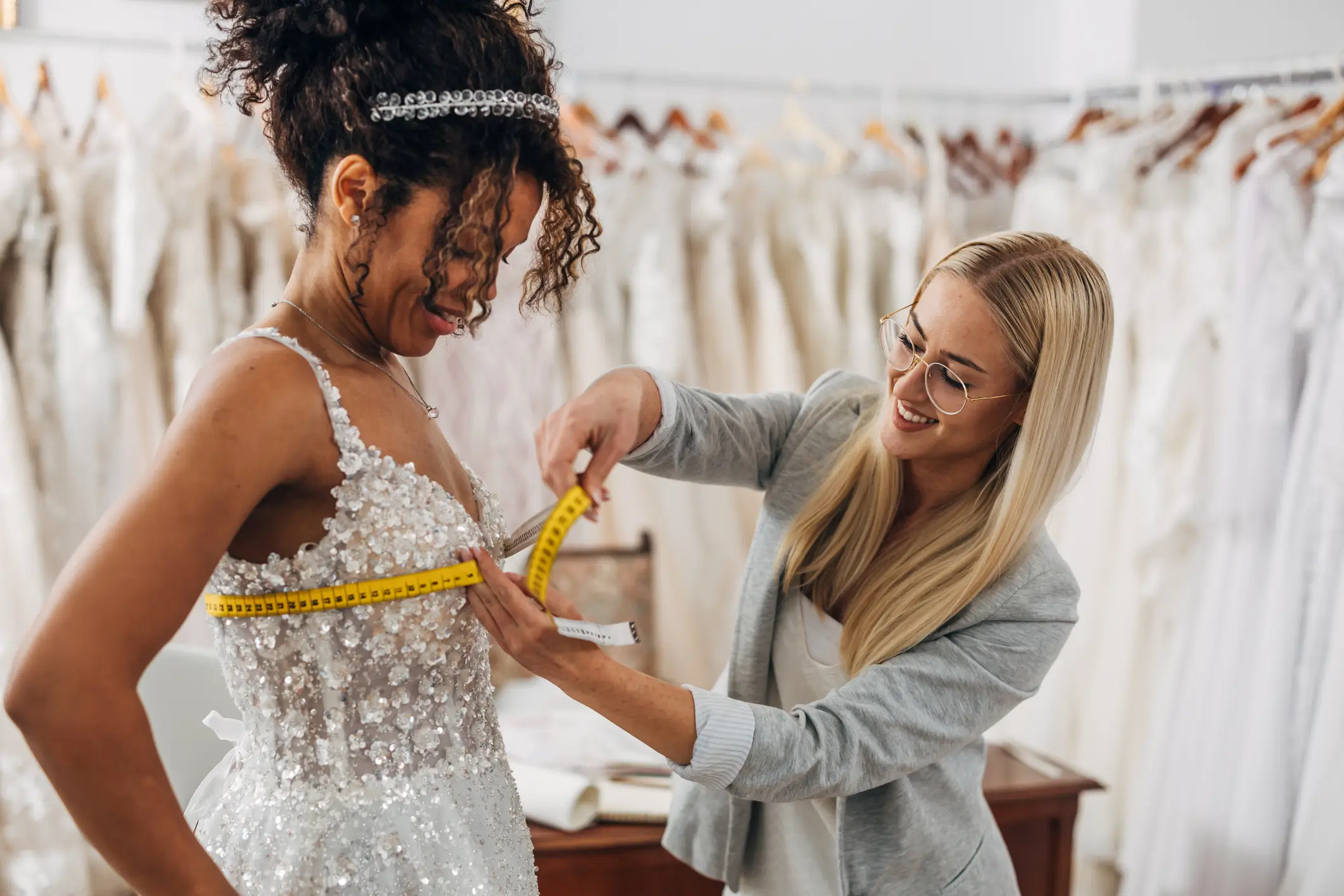
Wedding dresses and elaborate formalwear sit in their own category, and underestimating the timeline can leave very little room for corrections. These garments often involve more complex construction and may require multiple fittings rather than just one appointment.
For wedding dresses specifically, starting about two to three months out aligns with common bridal alteration timelines. The dresses typically undergo three fittings before the wedding, with alterations starting 8 to 12 weeks before the event. Dresses ordered online or from out of state may require additional planning to account for delivery and initial inspection.
Certain garment details can make the work more involved:
If your garment has any of these features, mention it when you book so the shop can evaluate the work and recommend an appropriate timeline from the start.
If a second fitting is needed, it can't happen until the first round of work is complete. And if that fitting turns up anything that needs adjustment, the correction needs its own turnaround time afterward.
A more involved alteration may look like this:
The last date you can comfortably start isn't based on sewing time alone. It also needs to account for any fittings and corrections your particular garment may require.
When a follow-up fitting is recommended, skipping it removes the opportunity to catch a shifted seam, uneven hem, or small fit issue before the event. If you're running short on time, ask the shop whether or not a shorter confirmation appointment is possible rather than assuming the garment is finished as soon as the sewing is complete.
Turnaround times depend partly on shop capacity. Wedding season, prom season, and the weeks leading into major holidays can bring more alteration requests at once, so a timeline that works during a quieter period may not be available during a particularly busy season.
If your event falls during a high-demand period, leave an additional buffer rather than treating a general timeline as fixed.
Demand can increase around periods such as:
If your event falls during one of these periods, call ahead and ask about the shop's current turnaround rather than assuming a general timeline still applies. Rush handling may sometimes be available, but that depends on the shop and the alteration involved.
One avoidable delay has nothing to do with the shop's schedule: showing up to a fitting without the pieces that affect how the garment sits.
Take these to your fitting appointment when they apply:
For accurate fitting, wear shoes and undergarments similar to those that will be worn with the garment, helping keep curves and hem lengths consistent. Taking the right pieces from the beginning gives the tailor a more accurate picture of how the finished garment needs to fit.
Have a big event coming up? Don’t wait until the outfit becomes one more thing you’re rushing to finish. Getting your alterations started early leaves more time for adjustments and any additional fitting your garment may need.
If you’re in Porter Ranch, California, and searching for tailoring, Porter Ranch Cleaners handles expert tailoring and alterations for everything from hems and sleeve adjustments to formal dresses, structured pieces, and wedding dresses. Our services are also available to customers throughout our broader service area, not just Porter Ranch.
Bring in your event outfit and let our seamstresses get started while there’s still plenty of time.
Address: 19450 Rinaldi St., Porter Ranch, CA, 91326
Phone: +1 (818) 452-4894