Most stain removal advice tells you what to do. Dab this, soak that, scrub in this direction. Almost none of it tells you why some stains shrug off every home remedy while others rinse out in seconds. This is because home washing is water-based, and water dissolves some molecules while doing nothing to others.
The dry cleaning stain removal process, on the other hand, uses solvent-based chemistry built for that other set, which is the entire reason some stains need a professional and others don't. Below, we walk through five stain families and the specific reasoning behind each, so you know when to try it yourself and when to call in a dry cleaner.
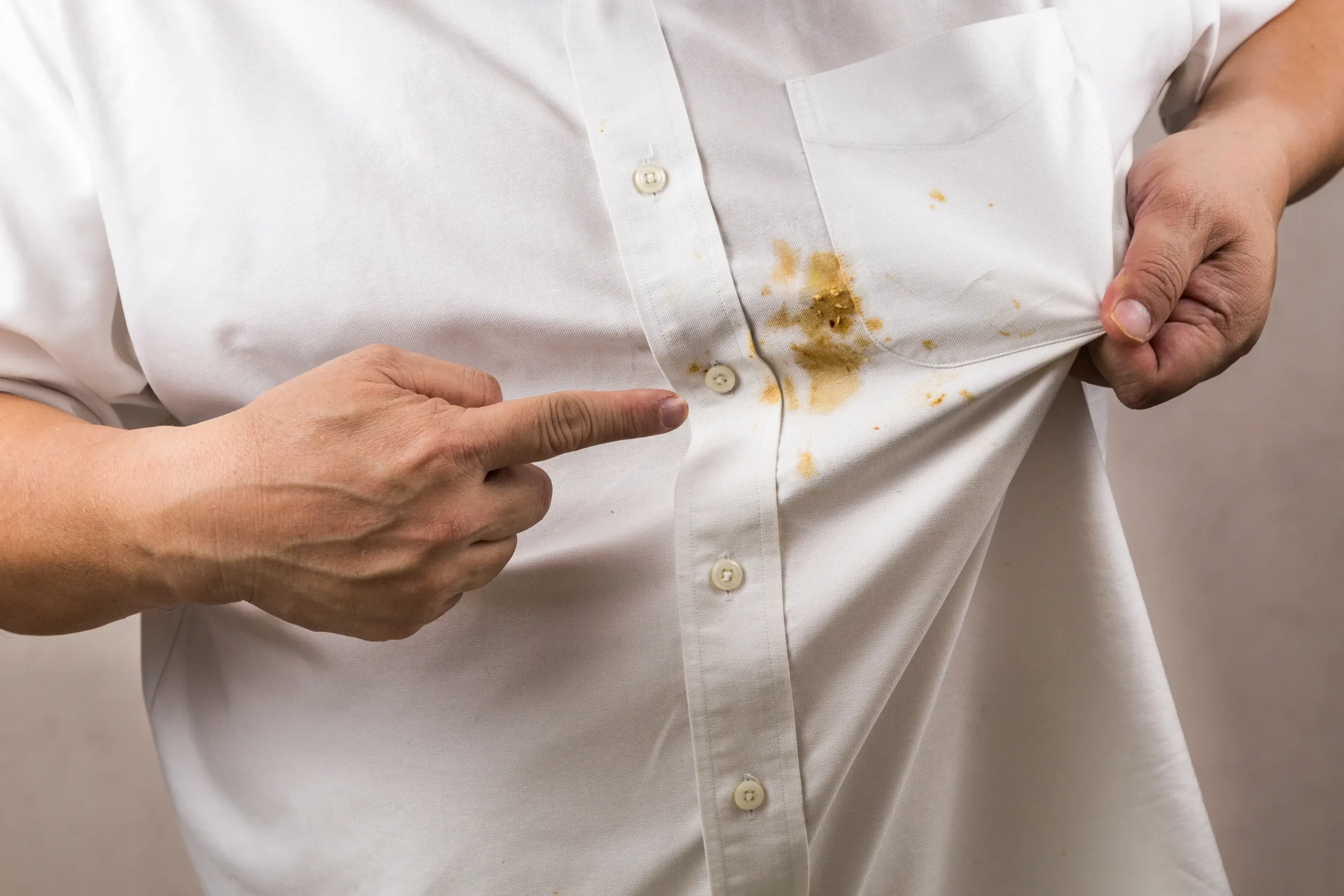
Cooking oil, salad dressing, cosmetics, motor oil: these all share one trait that makes them resistant to washing. They're hydrophobic, meaning their molecules repel water instead of bonding with it. Detergent helps some, since it can surround oil molecules and lift away a portion, but on fabric, the oil often penetrates fibers faster than detergent can act, especially once it's had time to set.
Dry cleaning solvents are non-polar, which is the chemical opposite of water. That property lets them dissolve oil directly, the same way oil dissolves oil. There's no fighting the stain's chemistry, only working with it.
Fabric changes the outcome as much as the stain. Polyester and other synthetics have a slight oil affinity of their own, so oil bonds faster and deeper on synthetic blends than on cotton.
Silk and wool add a second problem: they can't take the heat or agitation of a home wash cycle, so even techniques that work on cotton are off the table. That combination, fiber chemistry plus fabric fragility, is often the real reason a garment ends up at the cleaner instead of the washing machine.
Wine, coffee, and tea are trickier than oil because they're only partially water-soluble. Water can lift some of the liquid and sugar content, which is why a fresh wine spill often looks like it's coming out under a napkin and cold water. What's left behind are tannins: plant-based pigments that form chemical bonds with natural fibers such as cotton, linen, and wool.
This is the part that confuses most people. The stain seems to fade in the wash, sometimes nearly vanishing while wet, then dries into a faint, stubborn ring. That ring is tannin residue bonded to the fiber at a molecular level, not sitting on the surface, which is why water never touches it.
Removing it takes enzyme pretreatment to break the tannin-fiber bond, followed by solvent cleaning to lift the pigment. Skip the enzyme step, and you just re-wash the part of the stain that was never going to respond to water.
Ink isn't an accident of chemistry that happens to resist water. It's engineered to resist it. Manufacturers design ink to survive contact with liquids so documents and prints don't smear, which means the same properties that make ink useful on paper make it a nightmare on fabric.
Not all ink behaves the same way, though, and the type matters for how it's treated:
Heat is the enemy here. Many home instincts default to hot water for tough stains, but heat accelerates ink's bond to fabric fibers rather than loosening it. What might have been a recoverable stain with cold-water solvent treatment can become permanently set after one hot wash cycle. This is one of the more common ways a manageable stain turns into a total loss before it ever reaches a professional.
Underarm yellowing looks like a simple sweat stain, but it's actually a combination reaction. Aluminum compounds from antiperspirant mix with proteins in sweat and bond to fabric fibers, particularly on synthetic materials such as polyester blends common in dress shirts. This is a different chemical problem than a fresh sweat stain, and it responds to different treatments.
Standard washing doesn't break the aluminum-protein bond, regardless of water temperature. Breaking it takes enzyme pretreatment formulated for protein structures, applied before the cleaning cycle starts.
Skip that step and the yellowing often reappears, sometimes more visible than before, since the surrounding fabric gets cleaned while the bonded residue stays put. That's why the same white dress shirt can come back from a home wash looking worse in exactly the spot that mattered most.
Blood is water-soluble, which sounds like good news until you factor in temperature. Cold water can dissolve and lift fresh blood reasonably well. Hot water does the opposite: it cooks the proteins in blood the same way heat cooks an egg, permanently changing their structure and binding them to the fabric.
A blood stain that's already dried or been through a hot wash isn't necessarily unrecoverable, even though it looks that way. Dry cleaners use enzyme pretreatment at carefully controlled cold temperatures to break down the set protein structure before cleaning. It's often recoverable, though results depend on how long the stain sat and the fabric it's on.
Every stain family above has a version of the same trap: a well-meaning home remedy that actively works against the chemistry involved.
Heat-setting is the single biggest cause of unrecoverable stains across all these categories. Once heat locks a stain's chemical structure into the fiber, no amount of solvent or enzyme treatment can fully undo it. If there's one habit worth breaking before dropping off a garment, it's reaching for hot water on anything you're not certain about.
Professional cleaning isn't a stronger version of what you'd do at home. It's a different chemical approach built around the specific molecule causing the stain.
Before any solvent touches the fabric, a proper assessment identifies the stain type, how long it's set, and what the fabric can tolerate. That determines the pretreatment, the solvent family, and the temperature. Home washing treats every stain the same way regardless of cause. Professional cleaning treats the cause, not just the appearance, which is why it succeeds where home methods stall out.
This is genuinely why dry cleaning often recovers stains that look like a total loss, though it's worth being honest that recovery isn't guaranteed once heat or bleach has already set the chemistry against you.
Some stains just don't respond to home methods, and you now know why. What you do next decides if the garment can still be saved.
At Porter Ranch Cleaners, our Dry Cleaning Service has always been 100% PERC-free, using environmentally responsible solvents that clean thoroughly without exposing your garments or your household to harsh chemicals. When you need dry cleaning in Los Angeles, California, we assess the stain properly before we touch it, so you don't have to worry about shrinkage, fiber damage, or unnecessary friction while still getting a deep, effective clean.
Bring it by, or schedule a FREE Pickup and Delivery Service, and let's get it handled before another wash cycle makes the decision for you.
Address: 19450 Rinaldi St., Porter Ranch, CA, 91326
Phone:+1 (818) 452-4894
Hours: Monday to Friday 7:00 AM to 7:00 PM l Saturday 8:00 AM to 6:00 PM l Sunday Closed