
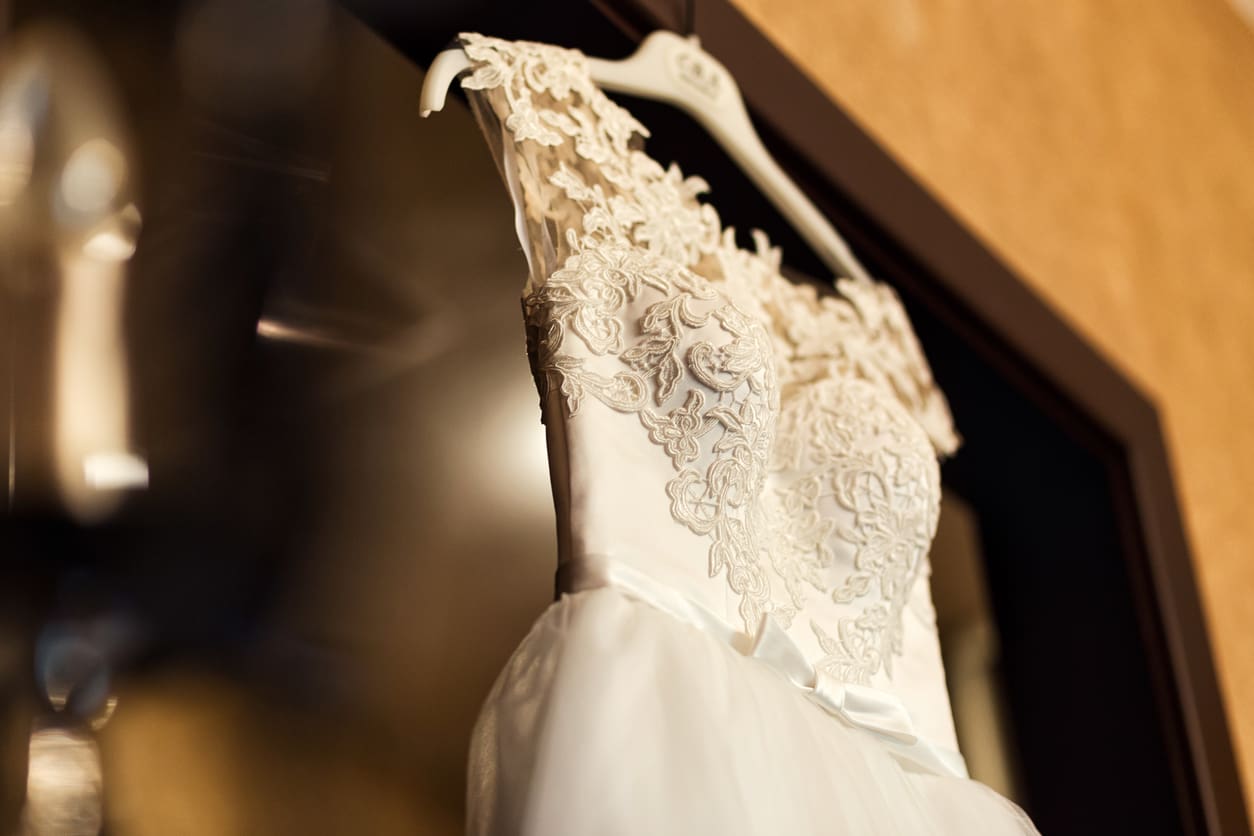
Preservation specialists see dresses at every stage. Fresh from the wedding, still in the garment bag from the venue. Six months later, folded into a plastic bin. A year out, just remembered and suddenly urgent. Two years out, found during a move and brought in with fingers crossed.
Most of them are still worth saving. Here's what actually determines what’s possible with your dress.
This is what most brides actually want to know. Find where you are on this timeline and go from there.
The ideal window. Body oils, perspiration, and champagne residue are still fresh and respond well to professional pretreatment. This is when wedding dress preservation produces the cleanest, most reliable results.
Still very good. Some oxidation of invisible soils may have begun, but a skilled cleaner can address most of it. Full stain removal is still realistic for the majority of dresses.
Results get less predictable. Oxidized soils are harder to treat, and some yellowing in high-contact areas may be partially set. Professional cleaning will still significantly improve the dress, though “perfect” may no longer be on the table.
Some discoloration may be irreversible, but professional cleaning can stop further damage and stabilize what’s still in good shape. Preservation at this stage is about protecting what’s left, not restoring what’s gone.
Outcomes vary a lot depending on fabric type, how the dress was stored, and to what it was exposed. Don’t assume it’s too late without having it professionally assessed first. Some dresses brought in after more than a year clean up much better than the bride expected.
Not all wedding dresses age the same way. Silk and silk blend dresses are more sensitive to oxidation and show yellowing faster than polyester or chiffon. A satin duchess gown that’s been stored in a warm room for six months may look worse than a lace-trimmed chiffon dress stored in the same conditions.
This is part of why a professional assessment matters so much at the later stages: the right cleaner will look at the specific fabric before making any promises about results.
Your dress may look fine right now. That’s actually part of the problem. The soils a wedding dress picks up during a full day of wear – sweat, body oils, sugar-based spills, and champagne – are colorless when fresh. You can’t see them.
But as they oxidize over time (a slow chemical reaction driven by air, heat, and light), they turn yellow or brown. On white and ivory fabric, this shows up as discoloration at the underarms, waist, hem, and neckline.
The process is gradual, which is why so many brides are caught off guard. The dress looked fine for three months. By eight months, there’s yellowing that wasn’t there before. And if it’s been sitting in a plastic dry cleaning bag, the process moves faster, as plastic traps moisture and releases compounds that accelerate the damage.
If your dress is in a plastic dry cleaning bag, take it out today. Swap it for a clean white cotton pillowcase or breathable garment bag and move it somewhere cool and dark. This won’t reverse anything that’s already happened, but it will slow down what’s still happening. It’s a small step that buys you a little more time while you figure out your next move.
If you’re past the six-month mark, this section is for you. The short version: don’t write off the dress until a professional looks at it.
Here’s what actually happens when you take in a dress for a late-stage assessment:
What “Preservation” Actually Means at This Stage
Wedding dress preservation isn’t just cleaning. After the dress is professionally cleaned, it’s wrapped in acid-free tissue and boxed in an archival-quality, pH-neutral box. This packaging prevents the kind of long-term yellowing and fiber breakdown that happens when dresses are stored in regular boxes, garment bags, or plastic.
For a dress brought in after six months, the cleaning addresses what’s already there; the preservation boxing is what protects the dress from that point forward.
Not ready to take it in today? These storage adjustments will reduce ongoing damage while you make a plan.
Spot-treating a stain with household cleaners, soaking the dress in a bathtub, or trying a DIY whitening method can all make the situation worse. Some home products react with the oxidized soils already present and set the stain permanently.
Others damage delicate lace, beading, or embroidery that can’t be repaired. The safest move before taking in the dress to a professional is to do nothing beyond the storage adjustments above.
The longer your dress sits without professional attention, the harder it becomes to reverse the damage, but that doesn’t mean the opportunity is gone. Whether your wedding was three months ago or fourteen, a professional assessment is the only way to know what’s actually still possible for your dress.
At Porter Ranch Cleaners, every dress that comes through our doors is hand-cleaned using gentle techniques that protect fragile fabrics, lace, and structure, and we use only environmentally safe cleaning solutions that remove perspiration and staining without compromising the fabric or its delicate dyes.
During the cleaning process, we also do a complete inspection, reinforcing seams and reattaching any loose beads or embellishments as needed, so the dress comes back to you in the best possible condition.
Bring it in, and we’ll give you an honest picture of what we can do before any work begins. No pressure, just a clear answer and a path forward.
Contact Guide:
📍 19450 Rinaldi St., Porter Ranch, CA, 91326
🕒 Monday through Friday, 7:00 AM to 7:00 PM | Saturday, 8:00 AM to 6:00 PM | Sunday: Closed